From Todd Graves — the man Moe Norman once called “me without the belly”
The night before the last round we ever played, Moe Norman put a piece of paper in my hand
What he wrote there has taken me the rest of my life to understand — and everything I know about golf, and about being a person, turned out to be folded up inside it
Coming soon — not yet available to order
Golf From Your Heart is tentatively set for release on October 15, 2026. Join the wait list below and you will be notified first, with a private order link, the day it is ready — the five hundred signed copies go first come, first served.
Tentative release — October 15, 2026
00
Days
00
Hrs
00
Min
00
Sec
Dear Friend,
A handful of us were meeting for dinner that evening, at a place built on two levels — a steakhouse up top, and a quieter Italian place tucked in downstairs.
Moe was already there when I walked in.
Sitting off by himself in a chair in the lobby, waiting on the rest of us, with a small handful of papers in his lap — because Moe was always holding something, always working on something, even at rest.
He saw me. He got up. He shuffled through those pages, pulled one loose, and put it in my hand.
On it, in his own handwriting:
Play Golf From Your Heart.
I thanked him, and I put it away, and we all went in to dinner.
We had all settled on the steakhouse upstairs. Moe announced that he wanted to eat downstairs, at the Italian place.
So downstairs the whole group of us went, because you did not win that argument and you didn’t much want to.
And then he ordered a steak. From upstairs. Had them carry it down to him.
I have laughed about that a hundred times since, and every time it stands the whole man up in front of me again.
That was the last supper I ever shared with Moe Norman.
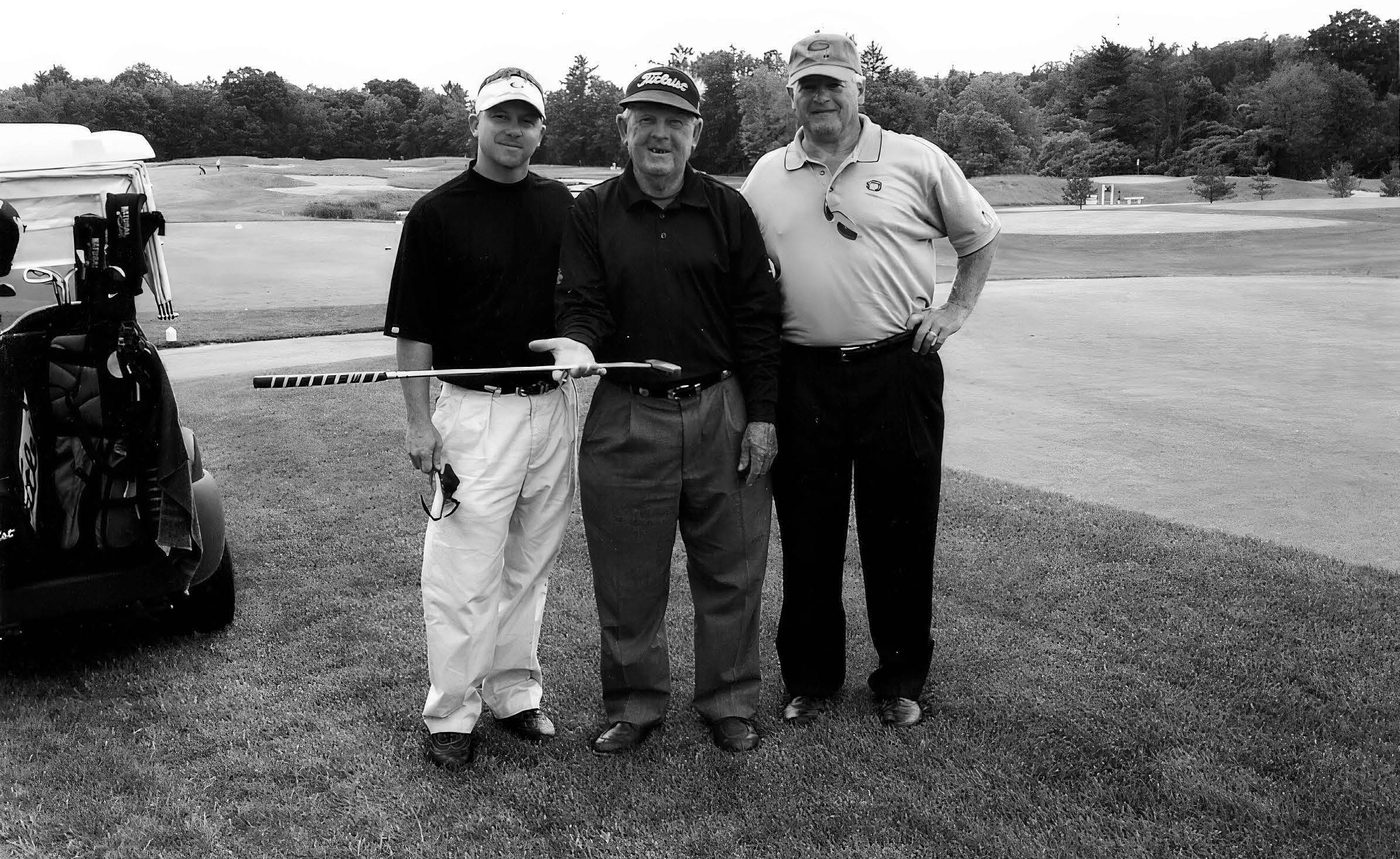
The next afternoon was his seventy-fifth birthday, and we played golf at a course called Copetown Woods, not far from his hometown of Kitchener, Ontario. Nine gentle holes and a long lunch — that was the ritual, every year. But at the turn Moe didn’t want to stop. “Would you like to play nine more?” he asked, and there was a softness in the way he asked it, something almost shy, that made my heart catch.
You always said yes to more time with Moe.
And on the last green we would ever share in this life, he rolled a fifty-foot putt clear across the green and into the middle of the cup like he’d called ahead and reserved the spot ...
... and then, the way he taught me everything — sideways, through the game — he turned to me and said the most important words he ever said to me.
“See. You have to golf from your heart.”
The same thing he had pressed into my hand the night before. Out loud this time.
Two months later he was gone.
First you should know who I was when I found him
I was broke.
I don’t mean careful with money. I mean out of options, out of road, and very nearly out of the game entirely.
I had chased a golf swing that would not hold. I had rebuilt it and rebuilt it and watched it abandon me anyway, in the places where it mattered most, and I had come within an inch of quitting golf for good.
What saved me was a grainy videotape.
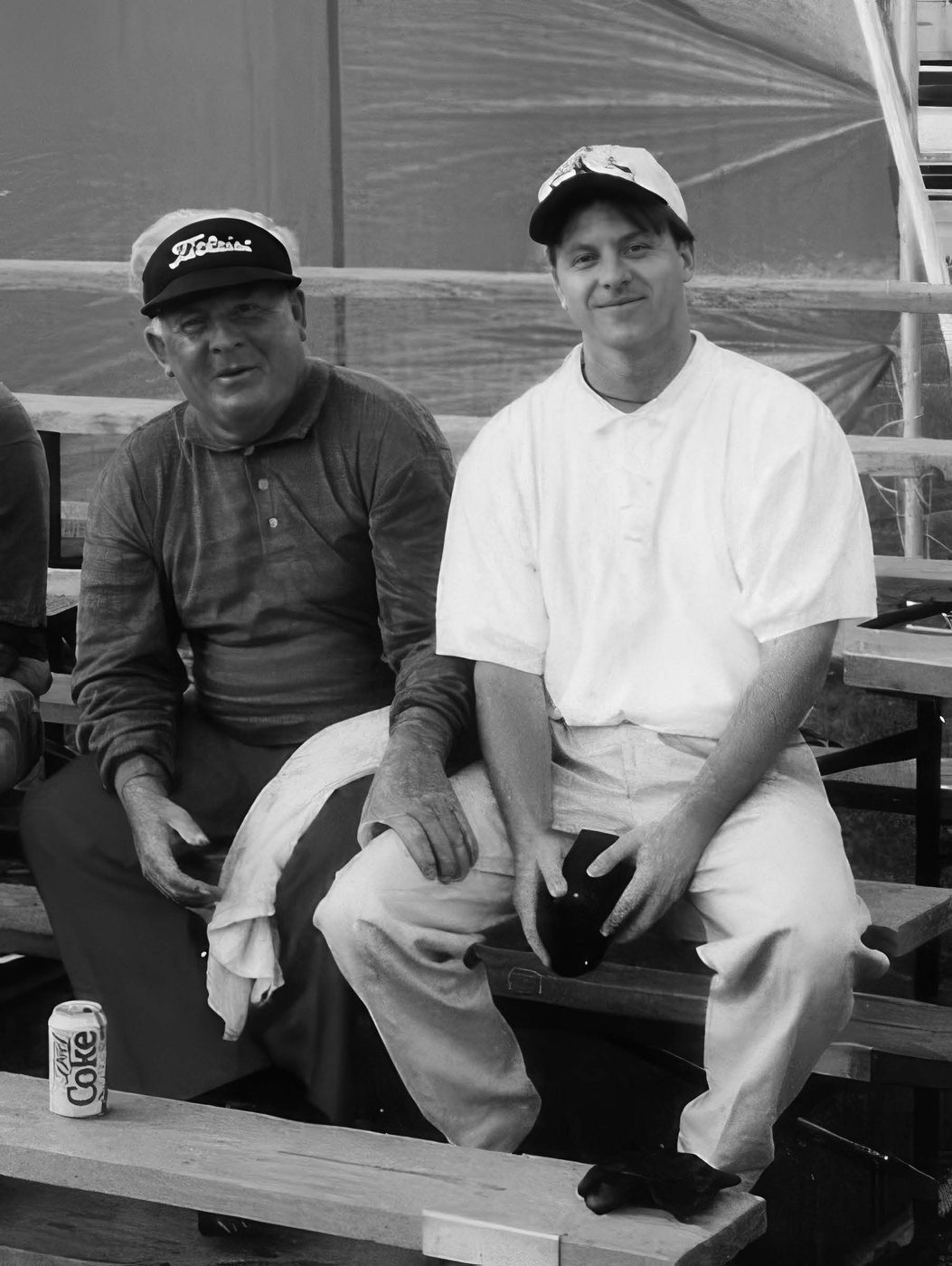
A strange man from Kitchener, Ontario, hitting golf balls impossibly straight. I spent a year teaching my own body to copy what I saw on that screen before I ever met the man who owned it.
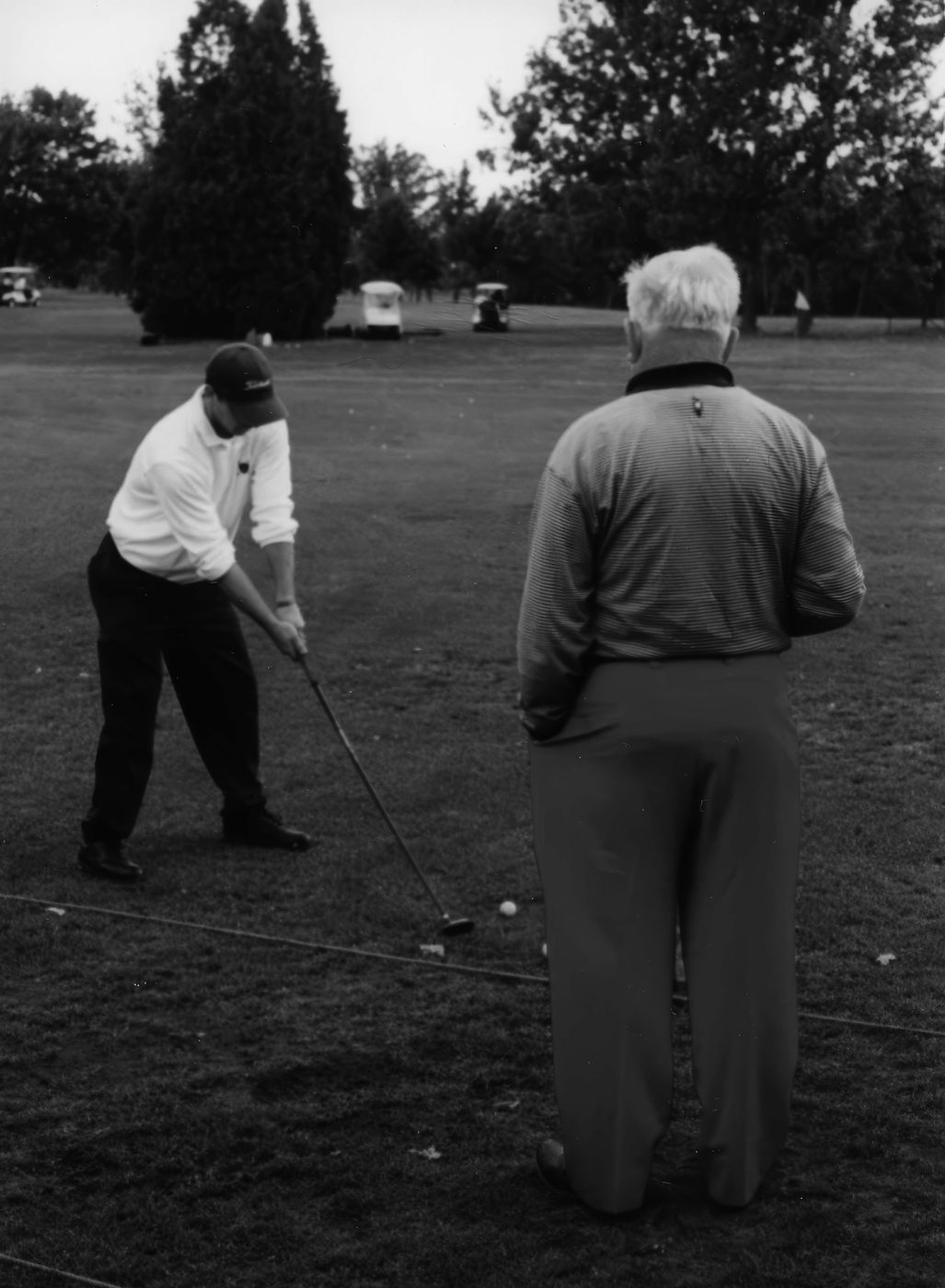
Then, in 1994, I finally stood beside him on a driving range outside Chicago. I hit one ball in front of him.
And Moe Norman looked at me and said the words that changed the direction of my life:
“Oooh. It’s me without the belly.”
The following year I earned my card on the Canadian Tour playing his swing — a motion so unlike anything else out there that players stopped what they were doing to gawk at it.
They nicknamed me Little Moe.
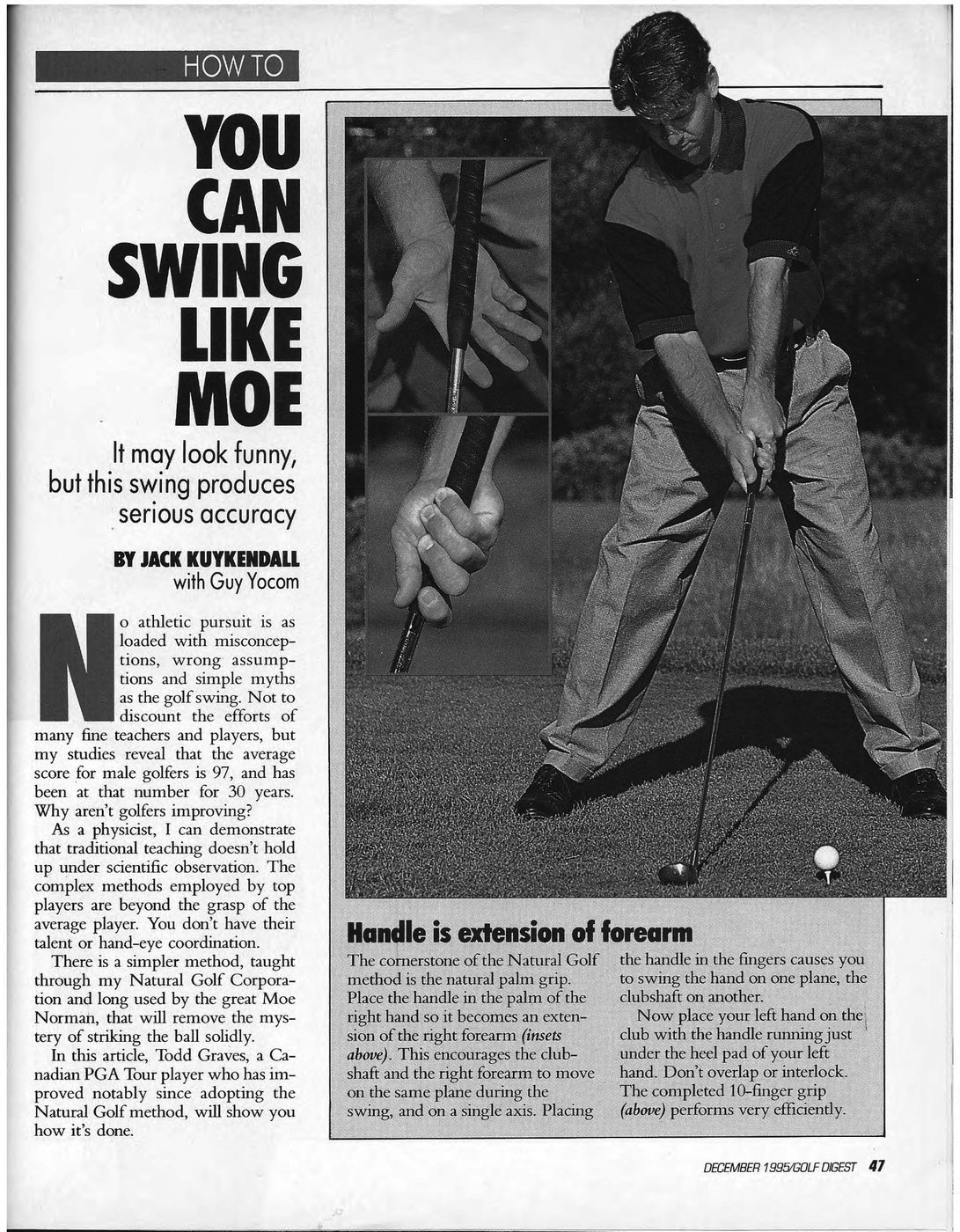
That December I turned up in Golf Digest, demonstrating the swing in the magazine’s landmark feature on Moe.
And for the ten years that followed I was at his side. Filming him. Studying him. Driving him to clinics. Playing golf with him.
And slowly being handed a gift I would not fully understand until it was far too late to say thank you for it.
The world looked straight through him for seventy years
You need to understand what Moe Norman was, and what the game did to him, or none of the rest of this will land.
He was the greatest striker of a golf ball who ever lived. That is not my opinion alone. Wally Uihlein — a man who watched every great player of the modern age up close — told me plainly that Moe got more out of his swing than any player in history.
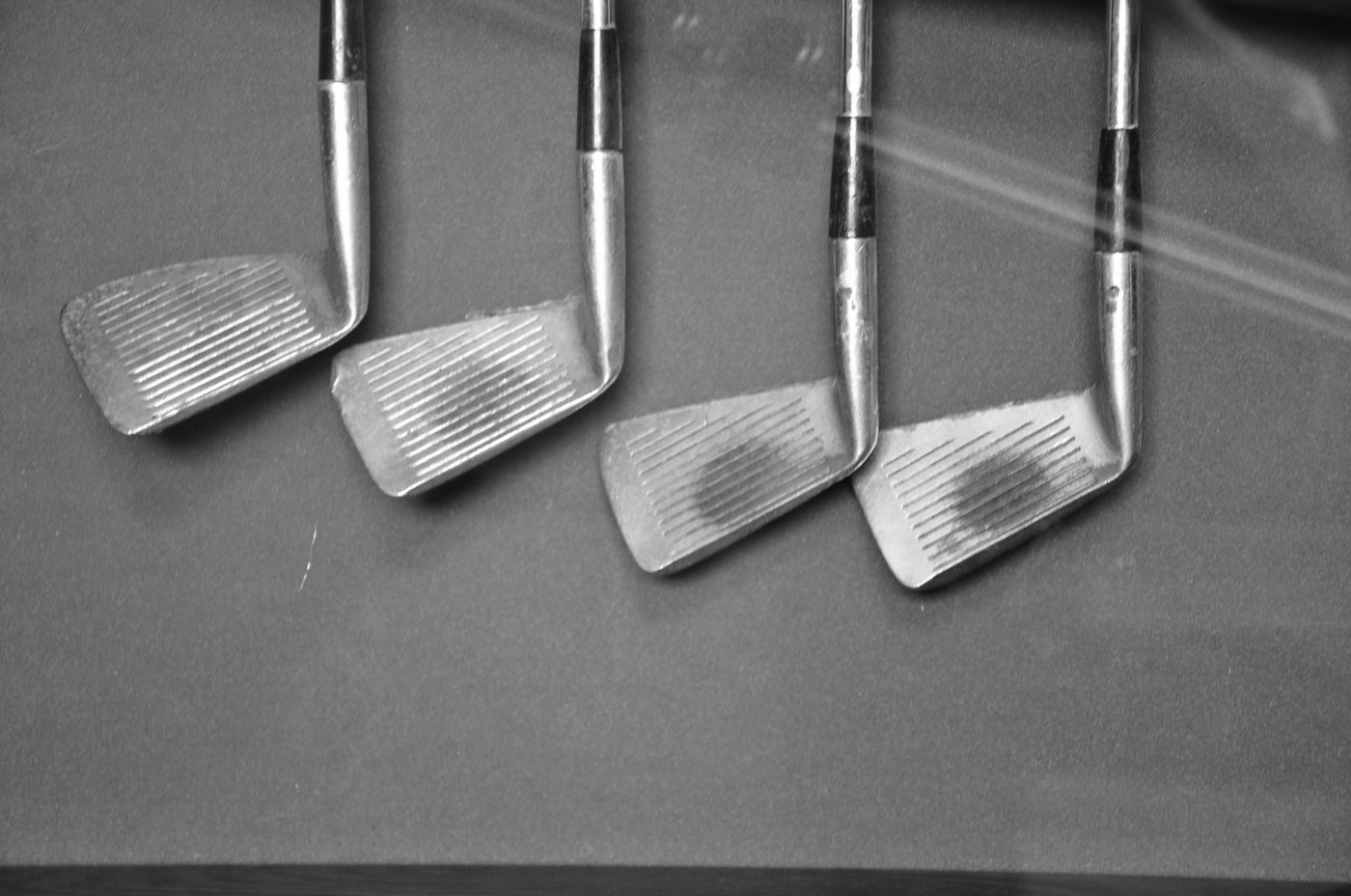
If you want the proof of it, look at his irons. I still have some of them. Every clubface carries the very same mark: a worn spot the size of a dime, rubbed clean into the exact center of the face — and nowhere else on it.
A million strikes. Every last one of them inside that same dime.
And the golf world called it magic.
A savant. A freak. A gift that fell on him out of the sky while the rest of us weren’t looking.
It was the exact opposite of magic. It was five solid years alone in the fields at Rockway with a shag bag and no teacher, between the ages of fourteen and nineteen, gathering up every ball he hit.
I asked him once where it came from.
“Hard work. You can’t buy it.”
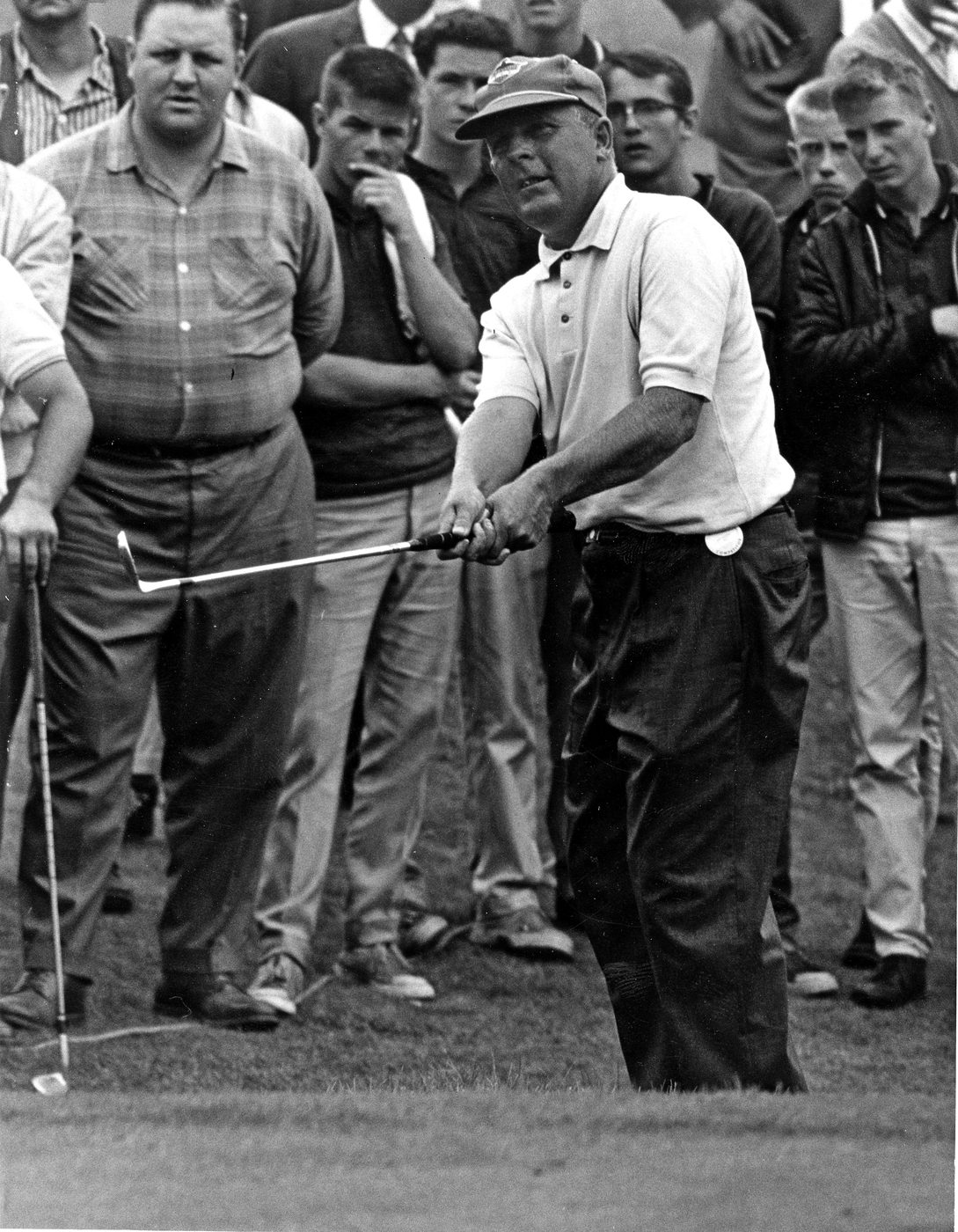
But he was odd. He hummed. He talked fast and sideways. He wore mismatched clothes and two watches. He made people uncomfortable, and rather than wonder what he knew, they decided the discomfort was his failing instead of theirs.
They filed him under curiosity. Sideshow. The strange little Canadian who hits it funny.
Moe understood it, in his way.
“I hatched too soon,” he’d say — and he’d say it lightly, the way you’d remark on the weather.
But there was a whole lifetime folded up inside it.
Why he let me in
For ten years I could not work out why a man that guarded had opened the door to me and almost nobody else.
I was not the most talented player who ever came looking for him. I was not the most famous, or the most connected, or the one with the most to offer.
I was a broke, desperate young man who had bet his whole life on a lonely genius in Canada that the entire golf world had laughed off.
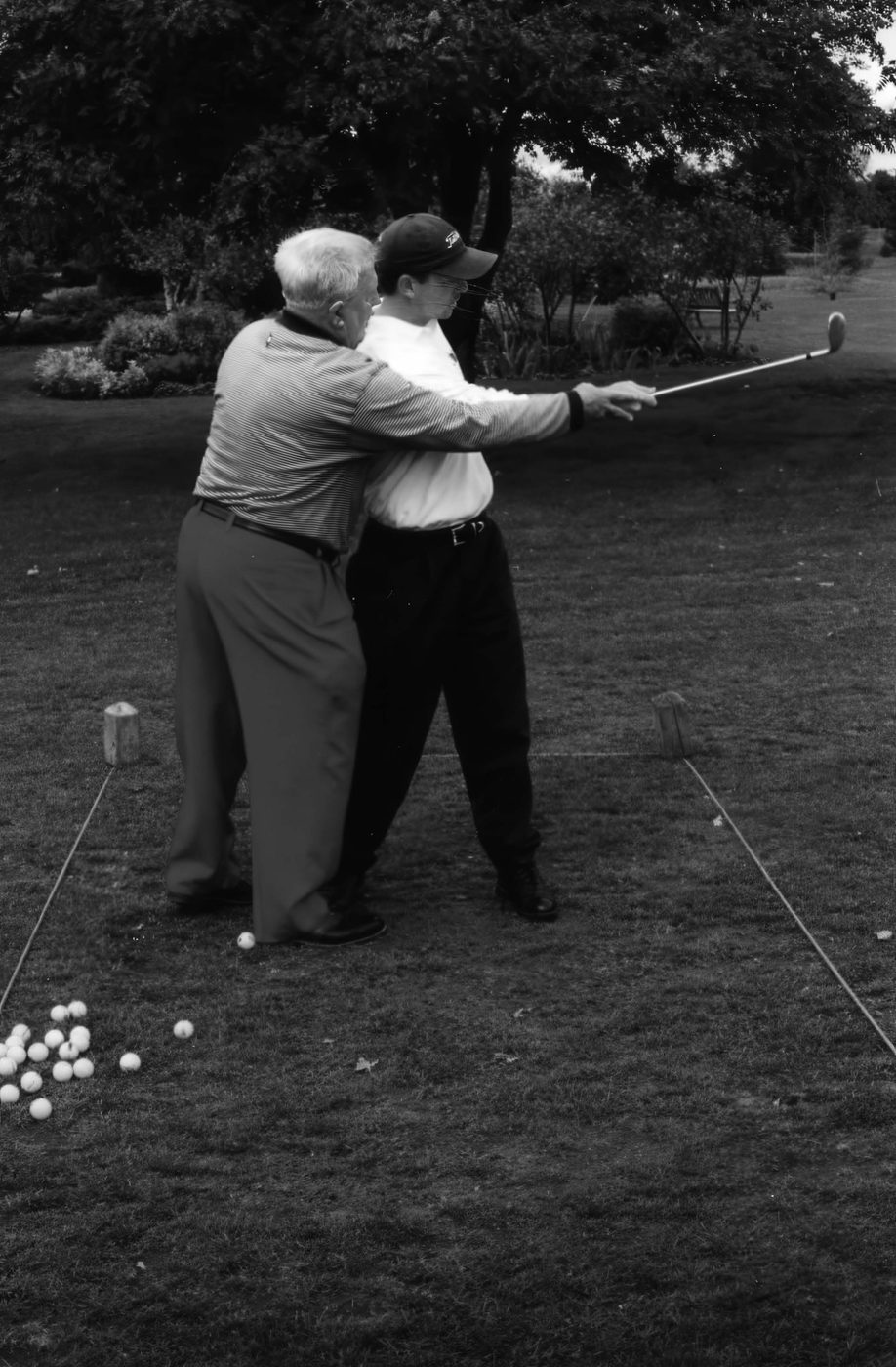
I trained in front of two television sets, matching my body to his frame by frame. I stood clown-wide to the ball, absurdly wide, because you have to overshoot a feeling by a mile before you can dial it back down to the truth.
I did this on a public driving range, in front of strangers, muttering to myself, half the time ignoring my own golf balls entirely.
I was, in a word, a freak.
People stared. Players stopped to gawk, and some of them laughed.
And I genuinely, completely did not care.
That is when I knew something had changed in me — because the thing I had actually come to Moe for was never the swing. It was the freedom.
Still, I never knew why he chose me. So on his last birthday, sitting at the turn with a couple of hot dogs, I finally asked him.
Why me? Of all the people who ever chased you — why did you let me in?
He didn’t hesitate. He never did.
“Because you wanted it. Nobody else ever did.”
I had to look away.
I sat there on my friend’s last birthday with a hot dog going cold in my hand and fought back tears, because in those few plain words he had handed me the whole truth of us.
It was never about my talent. I never had much of that, and I’ll tell you so in the book.
It was that I had wanted it — wanted him, wanted the thing he carried — more than anyone else ever had.
And he had felt that. And he had let me in.
And then, on the fifteenth tee, he told me why he was telling me
Later that same afternoon, he turned to me and said the thing I have carried the longest.
He had never thought anyone would really get it, he said. His swing. Not truly.
Not until me.
“You are the only one who really knows it. Others just think they do.”
I have never been prouder in my life, and I could barely stand to hold it.
Because we both knew what was underneath those words.
You don’t pass a thing on unless you’re getting ready to leave.
And he was getting ready to leave. We both felt it there on the tee, in the sunshine, neither of us saying it.
The promise
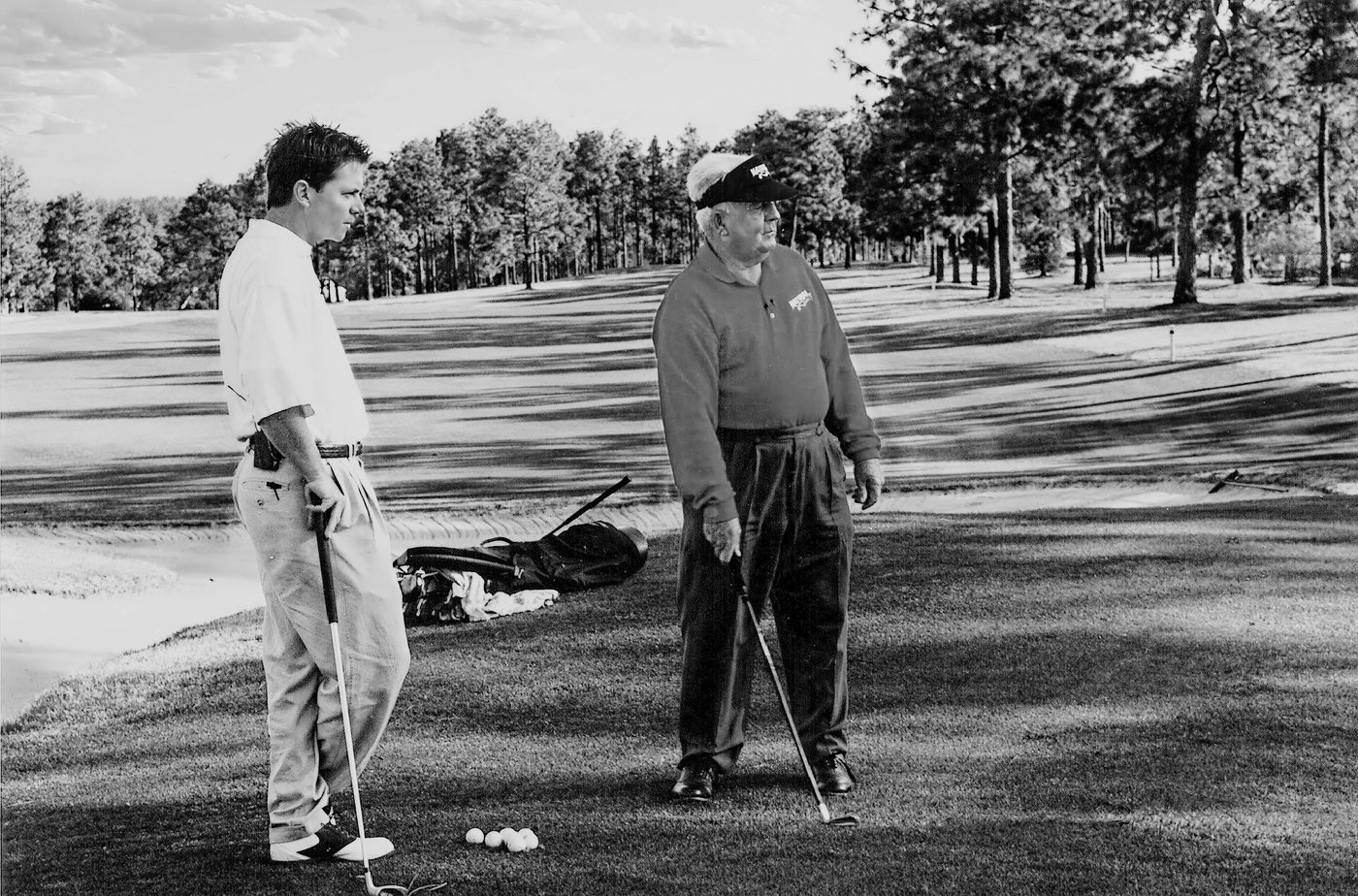
I made him a promise that afternoon at Copetown Woods.
That I’d be his voice.
That I’d carry his game to the world, whatever it ended up costing me.
I said it, and I meant it, and I had no earthly idea what I was actually promising.
I thought it was about a golf swing.
It has taken me years — and it is still taking me — to understand that I’d gone looking for a better way to hit a golf ball and walked away with a better way to live.
I founded Graves Golf in 2001. I have taught nothing but Moe’s swing for thirty years, and I have never once wanted to teach anything else.
Everything I have built since that afternoon has been me keeping that promise.
This book is the largest part of it.
Todd is signing five hundred copies and no more. The book releases October 15, 2026 (tentative). Join the wait list now and we will notify you the moment it is ready to order.
Join the Signed-Copy Wait ListWhat this book is not
Let me be straight with you, because I would rather you put this one aside than open it expecting the wrong thing.
This is not a golf instruction book.
There are no positions in it. No drills. No biomechanics, no checkpoints, no photographs of where your hands ought to be at the top.
I have written those books — The Single Plane Golf Swing and The Intelligent Golf Swing — and I’m proud of them, and if the how is what you’re after, they’re waiting for you and I’d be glad to have you.
I pulled the technique out of this one on purpose.
Because this is a different thing entirely. This is the story of a friendship. It is about a decade I spent beside the greatest ball-striker who ever lived, and what that decade did to me, and what I came to understand about golf and about living that has almost nothing to do with technique.
I put off writing it for a long time. Part of that was the work — there was always another clinic, another student, another day.
But if I’m honest, part of it was that this one costs more.
It is easy to write about a golf swing.
It is harder to write about a man you loved, and lost, and never properly thanked.
Nothing in here is invented
Moe’s words are his own. Every quote in this book is something I heard him say, or something recorded and preserved by people who were there. I have never once put a sentence in Moe Norman’s mouth. He deserves better than that, and so do you.
Where his phrasing sounds strange on the page — and it often does — that’s because Moe was strange on a driving range, gloriously so, and smoothing him out would be a kind of lie.
The rest is memory, and I’ve been straightforward about what memory is. These events span more than thirty years. I’ve reconstructed conversations as faithfully as I can, checked what could be checked, and corrected myself more than once while writing. Where I wasn’t sure, I’ve said so.
Nothing here has been invented to make a better story. Nothing has been softened to make me look better than I was.
What I had to put in it
Some of what is in this book I would rather have left out.
A Fox Sports crew, a host, and me tucked in just off camera translating every answer Moe gave — until the segment aired with my voice cut clean out of it, and the whole world watched a conversation that never happened.
The fifteenth hole at the Colorado Open, tied for the lead, where I left the feeling for one second to go count a prize that was not yet mine.
The clinic where Moe announced to sixty professionals that he had changed his move — and I stood there and nearly died, because I had watched that swing a thousand times and not one thing about it was different.
The glove box of that Cadillac, and the one thing he kept in it — the thing he treasured above everything else he owned.
And the phone call. And the thing I never got to say to him.
That one still sits on my chest.
What you’ll carry out of it
I can’t promise you strokes. This isn’t that book, and I won’t insult you by pretending otherwise.
Here is what I believe you will actually take away.
A way to play free of hope and fear. Moe called it an alert attitude of indifference. Care completely about the shot, and not at all about the score. He proved it over a lifetime, and I lost a tournament on one hole learning it.
Permission to be exactly who you are. Being close to a man like Moe hands you a kind of permission you didn’t know you’d been waiting your whole life to receive. I’ve met a great many impressive people. I have met almost no one who was that free.
The work without toil. Ten thousand balls struck in a field at dusk because the striking itself is the joy, and the prize was never once the point. When the money finally came for Moe at the end, he didn’t even cash the checks. He’d forgotten to want them.
And an answer to why you play at all. I spent years asking people that question on ranges and first tees, and if you keep gently digging past the first answers, you break into the same underground room every single time.
We are not really playing golf to play golf.
We are playing golf to come home to ourselves.
Who this book is not for
If you need your golf heroes tidy and marketable, this one will bother you. Moe hummed, wore two watches on the same wrist, slept in bunkers as a young man, and let uncashed checks pile up in the glove box of a Cadillac. I have not sanded any of that off.
And if you have never once felt like the odd one — never been laughed at for doing a true thing a different way, never wondered whether there might be an easier road that nobody bothered to show you — then I don’t think Moe has anything you need.
But if any of that landed, then he’s already reached you.
Signed-Copy Wait List
Golf From Your Heart
The book is not yet available to order. It is tentatively set for release on October 15, 2026. Join the wait list and we will notify you the day it is ready.
Tentative release — October 15, 2026
00
Days
00
Hrs
00
Min
00
Sec
Only five hundred copies will be signed. We expect them to go quickly.
253 of 500 signed copies left
I am signing the first five hundred. When those are gone I am not signing any more.
How the Wait List Works
This is a wait list, not an order. Nothing is charged today. You are simply putting your name down to be told first.
You will hear before anyone else. The day the book is ready, everyone on this list receives an email — and a text, if you ask for one — with a private order link, before the book is offered anywhere else.
Signed copies go first come, first served. Once those notices go out, the five hundred signed copies are claimed in the order the orders arrive. Being on the list gets you the link first.
Warmly,
Todd Graves
Founder, Graves Golf
Still proudly “Little Moe”
P.S. — Moe died on the fourth of September, 2004, on the eve of the hundredth Canadian Open, as if the game he loved had held the date open for him. He spent seventy-five years being looked at and almost never being seen, and he received, in return, a fraction of what he was owed. This book is the closest I will ever come to fixing that. If you have ever wanted to actually meet him — not the caricature, the man — this is where he is.
P.P.S. — There is a confession in here that I nearly cut, because it is the least flattering thing in the book and it still sits on my chest twenty years later. Ten years at his side. A thousand conversations. Everything the man gave me. And I never once sat Moe Norman down and told him plainly what he meant to me. I always thought there would be more time. Then the phone rang, and there wasn’t. If you carry one thing out of this whole book that has nothing to do with a golf swing, let it be that one — because I paid for it, and I would spare you the price. Do not wait to thank the people who made you.
P.P.P.S. — People ask me sometimes who will carry all this on. For years I didn’t have an answer. I do now. It isn’t a foundation, or a plaque, or a swing named after anybody. It’s whoever picks the book up next. The love is in your hands now.